
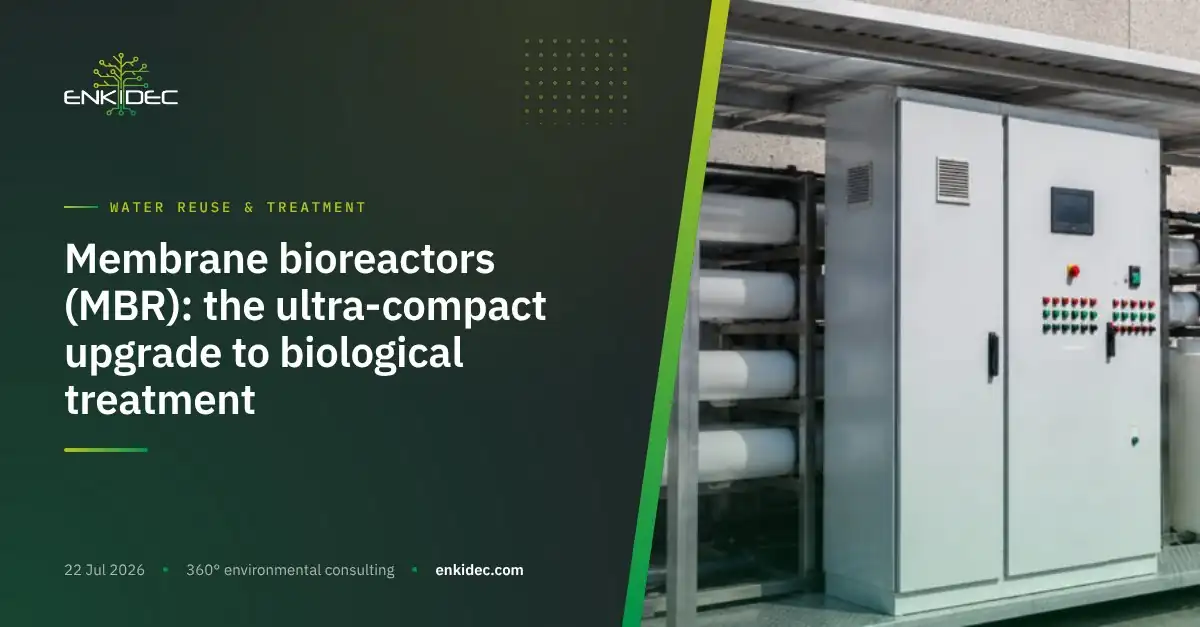
An MBR combines biological treatment with UF/MF membrane separation. It runs at 8–15 g/l MLSS (vs 3–4 g/l), cuts footprint by 50–70% and produces solids-free effluent ready for RO and reuse. The main challenge is fouling.
How it works
Biological degradation plus solid-liquid separation by ultrafiltration or microfiltration membranes, submerged or external. No secondary clarifier; HRT and SRT are decoupled.
Benefits
50–70% smaller footprint, solids-free effluent with very low microbial load, ideal RO feed for reuse, better degradation of recalcitrant compounds and resilience to shock loads.
Fouling control
Coarse-bubble air scouring, backwashing/relaxation and chemical cleaning with hypochlorite or citric acid. Energy demand has dropped with better modules and automation.
See industrial wastewater plants and revamping.

Twenty-five years in water treatment: operation and O&M, service and after-sales, permitting, project development and sales force management.
LinkedIn